SACOSS Election Platform Highlights Challenges in Regional Areas
South Australia’s regional communities deserve more consideration from all parties in the leadup to the 21 March state election, according to the South Australian Council of Social Service (SACOSS).
SACOSS is the peak body for the state’s community services and non-governmental health sectors, and in launching its election policy platform it has highlighted issues in regional South Australia.
The policy proposals have been developed and put to government over the last year, but are now being released publicly and SACOSS has written to all parties seeking a response in the lead to the state election. SACOSS will publish a report card scoring the parties on their policies and responses in these key areas in the week before the election.
The SACOSS platform has 11 specific proposals across 5 key areas: community service funding, housing, energy, human rights, and health. In each of these areas, there are specific challenges or impacts on regional communities.
Government funding of community services generally has not kept pace with rising costs, but there are additional costs of providing community services in regional areas, and there are particular difficulties of attracting and retaining staff that need to be addressed. The community sector needs a funding boost, adequate indexation and a workforce development plan.
Housing availability and affordability is an issue across the state, but in regional South Australia:
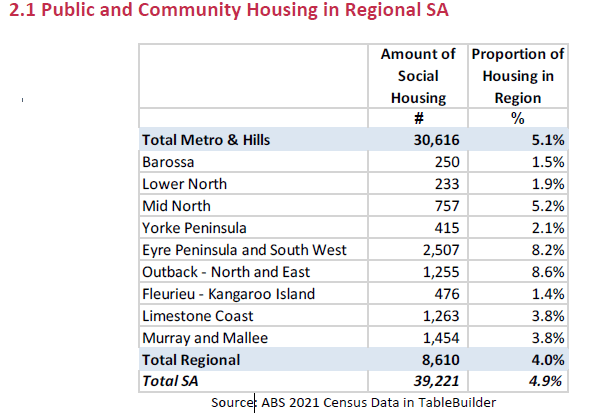
- There are proportionately fewer public houses than metropolitan Adelaide (see attached data)
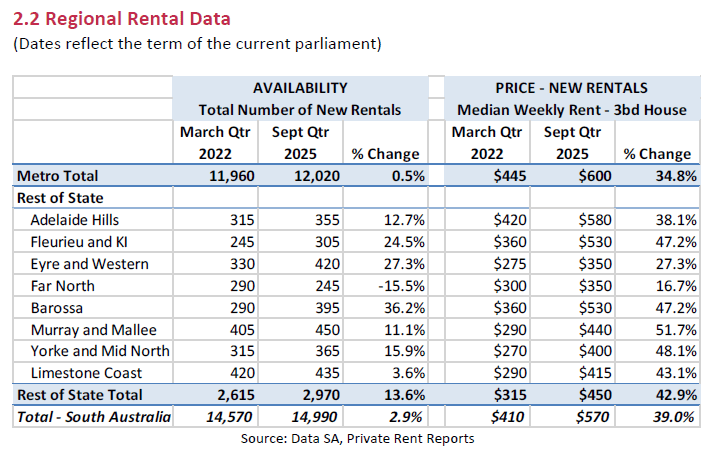
- The price of new rentals has gone up faster for almost all regional areas than in Adelaide (see attached data)
- Service providers report a chronic lack of emergency housing and a hidden problem of homelessness.
We need more public housing, caps on rent increases in existing tenancies, and more funding for homelessness services.
Energy policy looks different in regional areas where not all the state is connected to the national energy market and extreme temperatures heighten the need for thermal efficiency and good quality housing. SACOSS is calling for mandatory energy efficiency standards and a roadmap for electrification across the state.
Human Rights are universal, but a South Australian Human Rights Act could be an important tool requiring governments to consider access to services and supports for people in regional areas. SACOSS is calling for consultation to begin towards a Human Rights Act.
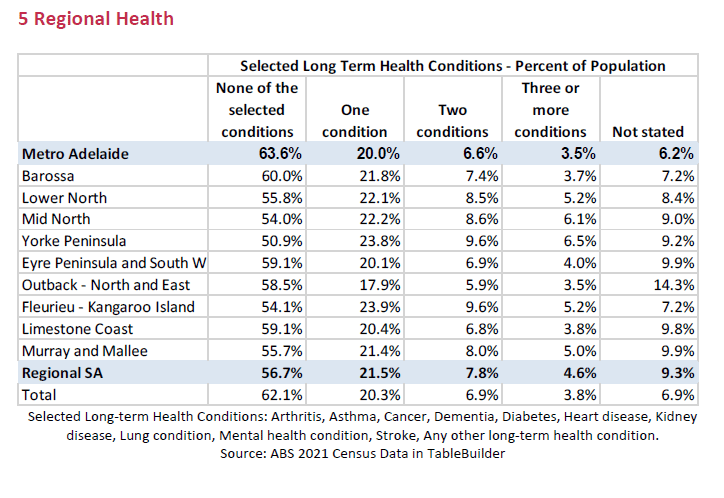
Health outcomes are worse in regional areas (see attached data) and the People’s Health Voice has already been working with regional communities to highlight health inequities, but funding is needed to continue and expand this project.
Full details of the SACOSS platform are available on the SACOSS website: https://sacoss.org.au/sa-election-2026/.
Quotes attributable to Dr Rebecca Tooher, SACOSS Director Policy and Advocacy
The SACOSS platform focuses on what should be key concerns for all parties to address inequality and assist those who are most in need in South Australia.
Our regional platform is not a comprehensive list of policies and investments required in regional areas, but it is a regional lens on SACOSS’ broader state election policy platform and it highlights the specific regional requirements in relation to those policies.
The issues we are highlighting will come as no surprise to people in regional areas, but they are issues and perspectives that are not always considered in metropolitan policy-making.
We look forward to hearing how the parties at this election will respond to the key issues and proposals in our platform.
Quotes attributable to Shane Maddocks, ac.care CEO
The cost‑of‑living crisis has become a sustained pressure in country communities that is hitting disadvantaged people the hardest, especially those already dealing with complex challenges.
It begins with the most basic human right: safe, affordable housing. Without a stable home, everything else becomes harder.
We need continued investment in genuinely affordable housing options, along with appropriate concession payments that allow people on low income to meet their essential needs.
It should never be the case that people are forced to choose between staying cool in summer or warm in winter, and keeping a roof over their heads. Yet these are the very real decisions many country people face every day.
We also need strong investment in community services. The more support available, the earlier we can step in, help people navigate challenges, and reduce the severity of issues before they escalate.
Early support gives people the best chance of building a more stable and secure life.